Taylor Tree & Service · Terrell, TX
Tree Trimming
Tree trimming for Terrell homeowners dealing with overhanging limbs, deadwood, and crowded branches, starting with a free estimate.
Taylor Tree & Service handles tree trimming in Terrell, TX for homeowners with overgrown, overhanging, or deadwood-heavy trees. That includes limbs over the roof, branches rubbing the fence, and crowns that have gotten thick and tangled. To get started, call or send a request and we will set up a free estimate before any work begins.
Maybe a limb is scraping shingles every time the wind picks up. Maybe the canopy has gotten so dense that the grass underneath has given up, or you are ducking branches every time you mow. After a rough North Texas storm season, a lot of people also look up and notice dead branches hanging in the crown, wondering which one is going to come down next. Trimming is how you deal with all of that before it turns into a bigger repair bill.
Trees rarely fail without warning. Most give you clues well ahead of time. Walk the yard and look for these:
If you see more than one of these on the same tree, it is worth getting it looked at this season rather than waiting for the next storm to decide for you.
Tree trimming, which many people also call pruning, means selectively cutting back branches to improve the tree's shape, safety, and clearance. On this page we are talking about work on living trees that stay standing. Common tasks include:
Overhanging limbs are the most common reason Terrell homeowners call. Branches that rest on a roof hold moisture, wear away shingles, and give squirrels an easy path to the attic. Along a fence line, growing limbs push on boards and posts over time. Cutting back to the right branch junction, rather than just chopping the tips, keeps the tree from sending out a mass of fast, weak sprouts.
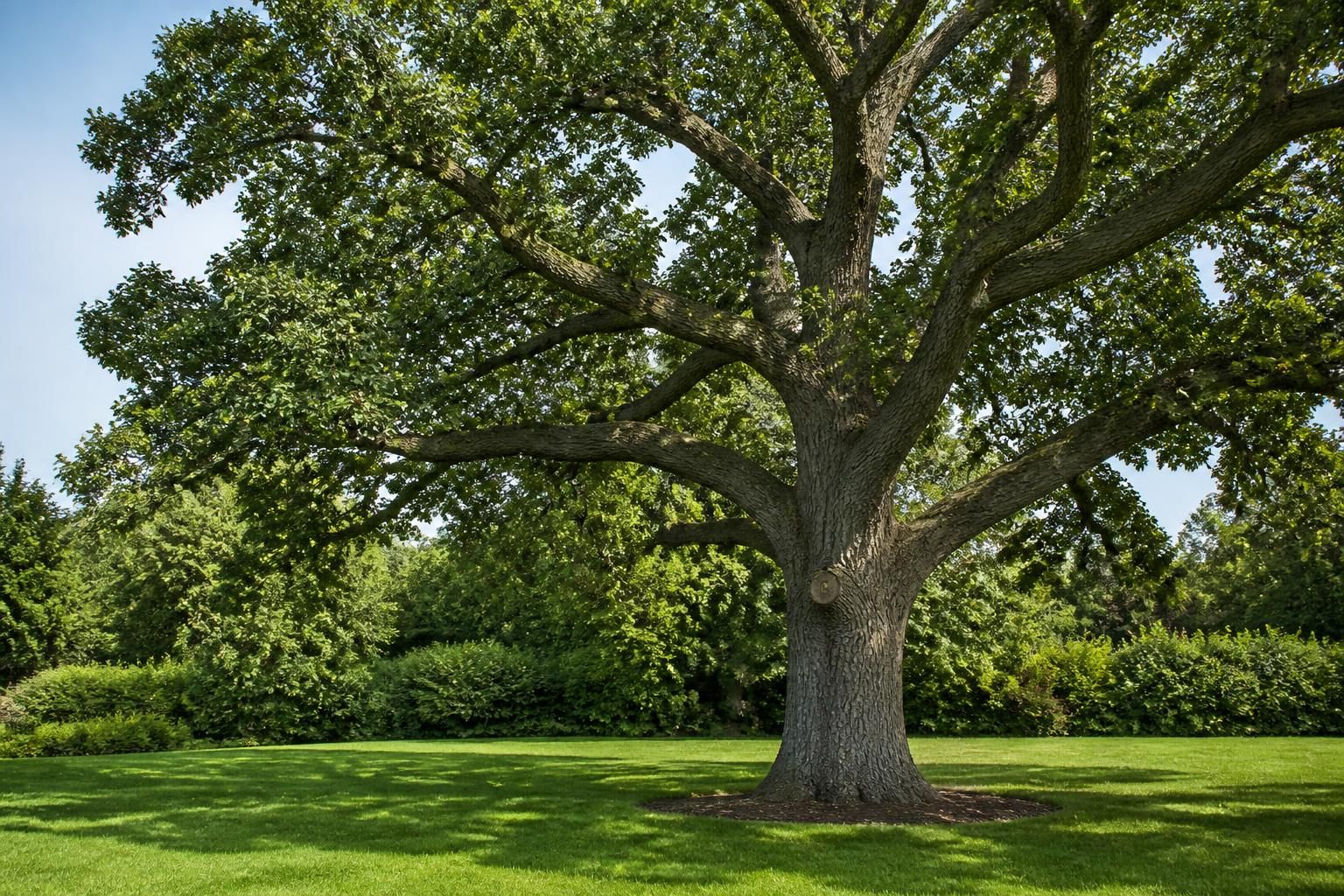
Thinning does not mean removing as much as possible. A good cut reduces weight and crowding while leaving the tree's natural form. Mature trees in this region, such as oaks, pecans, and elms, usually look best when the work is moderate and spread across the crown.
Homeowners often mix up trimming, tree removal, and stump grinding. They are different jobs. Trimming keeps a healthy tree and improves it. Removal takes the whole tree down. Stump grinding deals with what is left in the ground afterward. This page covers trimming only.
Sometimes a tree is too far gone, leaning badly, or split at the trunk, and trimming will not solve the problem. We also handle removal and stump grinding as separate services, so if you are unsure which one your tree needs, ask during the estimate and we will tell you what we see.
One more distinction matters: trimming is not topping. Cutting main limbs back to stubs leaves large wounds, triggers weak regrowth, and often shortens a tree's life. Be cautious about anyone who suggests it as a fix for height.
Timing depends on the tree and what you are fixing. Dead or hazardous limbs can be cut any time of year. For general shaping and thinning, many trees do well with work in the cooler months when they are dormant, and the cuts are easy to see without a full leaf canopy.
Oaks deserve extra care. In Texas, it is commonly advised to avoid cutting oaks during the spring and warmer months because of oak wilt risk, so ask any provider how they handle the timing on oak trees. Summer heat and drought stress can also make heavy cuts harder on a tree, so aggressive thinning is usually better left for a cooler season.
A typical job starts with a free estimate. Someone looks at the trees with you, you point out what bothers you, and the scope gets agreed on before anything is cut. Taylor Tree & Service serves Terrell, Forney, Mesquite, Garland, Rowlett, Rockwall, and Wylie, so tell us which city you are in when you call or send your request.
Here is what to look for when judging any trimming job, ours or anyone else's:
Every tree is different, so a clear estimate beats any one-size answer. These are the real factors that move a trimming quote:
A good written quote spells out which trees and limbs are included, how many visits are planned, what cleanup covers, which extras cost more, and how changes are handled if you add a branch or the scope shifts once work begins.
Most mature trees do fine with a look every few years, while fast growers and trees near the house may need attention sooner. Young trees often benefit from light shaping early so they do not need heavy cuts later.
Cooler months are a common choice for general shaping, and dead limbs can come out any time. Oaks have special timing concerns, so mention the species when you request an estimate.
It comes down to tree size, how many trees, how much needs to come off, access, and cleanup. We look at the trees first, then give you a free estimate before any work starts.
Not always, but it helps to be available at the estimate so we agree on exactly which limbs are going. Ask about the plan for the day when you schedule.
Done with clean cuts and moderate reductions, trimming usually helps a tree. Heavy cutting, topping, and poor timing are what cause harm.
Yes. If the estimate shows a tree is beyond saving, we can talk through removal and stump grinding as separate services. Call or send a request to get your free estimate for tree trimming in Terrell, TX.
What You Can Expect
We walk through the job and give you an estimate at no cost before any work begins.
Fallen or storm-damaged trees can happen at any hour, so we are available day and night.
We aim to leave your property looking better than we found it once the work is done.
Common Questions
Tell us what is going on with your trees or property and we will set up a free estimate before any work begins.